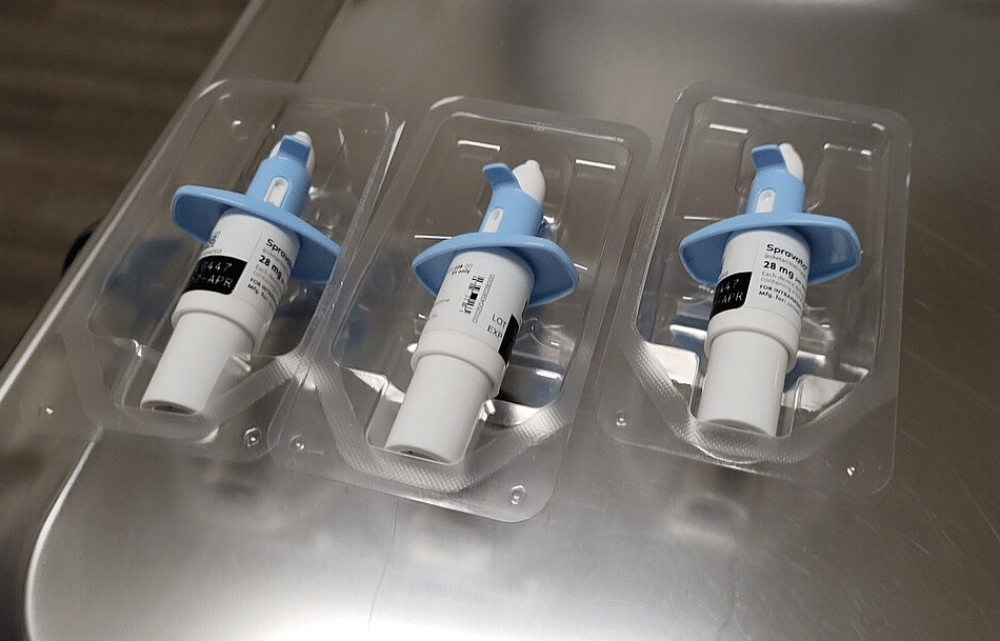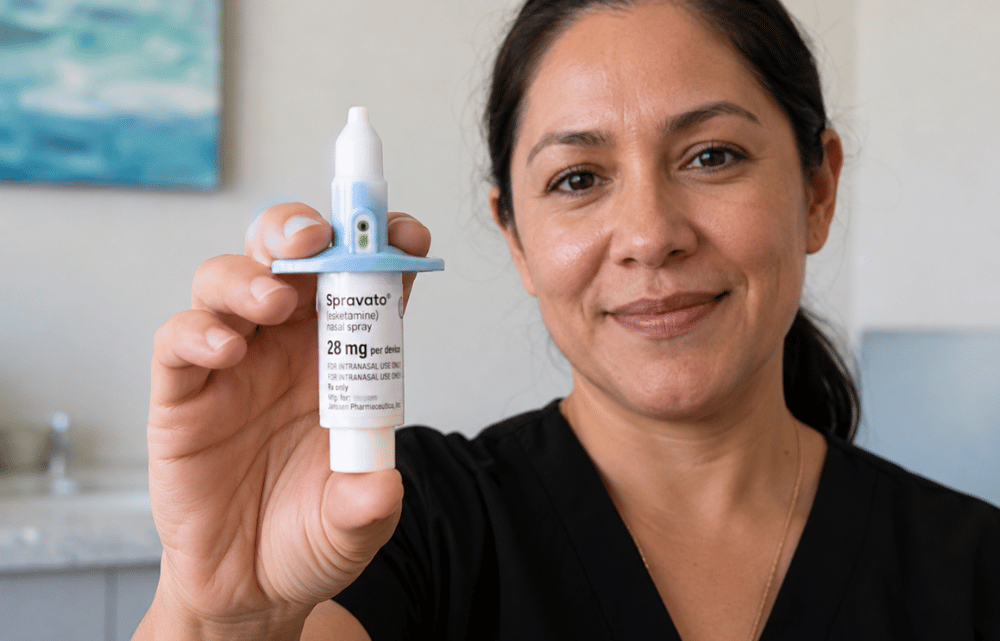
If you’ve been researching treatment-resistant depression, you’ve probably run into both “Spravato” and “ketamine” used almost interchangeably online, which understandably leads to confusion. Spravato is actually derived from ketamine, but the two are regulated, administered, and covered by insurance in very different ways. Here’s a clear breakdown of what separates them and how to think about which path might fit your situation.
| Question | Spravato | Ketamine |
|---|---|---|
| FDA-approved for depression? | Yes, since 2019 | No, used off-label for depression |
| Can it be used alone (monotherapy)? | Yes, for treatment-resistant depression since 2025 | Not FDA-approved for depression; treatment protocols vary |
| How is it given? | Nasal spray, self-administered under supervision | Typically IV infusion or IM injection |
| Typically covered by insurance? | Often covered when eligibility requirements are met; prior authorization may be required | Often not covered for depression; commonly self-pay |
| Regulatory oversight? | REMS-certified healthcare settings only | No depression-specific federal REMS program; standard medical and controlled-substance regulations apply |
The short answer above covers the basics, but the details behind FDA approval, how each is delivered, and what your insurance will actually pay for are worth understanding before you commit to either path.
What Spravato and Ketamine Have in Common
Both treatments work through the same general mechanism: they act on the brain’s glutamate system rather than the serotonin and norepinephrine pathways that traditional antidepressants target. This is a meaningfully different approach, which is part of why both options are considered for patients who haven’t responded to standard antidepressants like SSRIs or SNRIs. Glutamate plays a major role in synaptic plasticity, and treatments that act on this system tend to produce effects on a faster timeline than conventional antidepressants, which can take weeks to build up.
The Molecular Difference: Esketamine vs. Ketamine
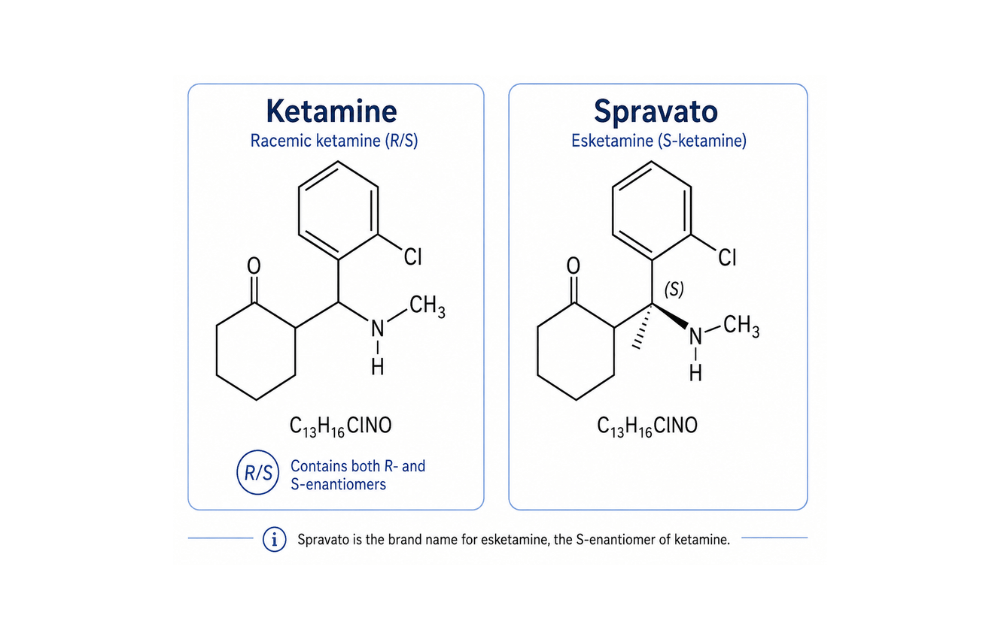
Here’s where the terminology gets specific. Ketamine, as a molecule, exists as two mirror-image forms, or enantiomers. Spravato contains only one of those forms, esketamine (the “S” enantiomer), while traditional ketamine treatments use the full racemic mixture of both forms. This isn’t just a technicality: esketamine binds to NMDA receptors somewhat differently, and it’s the form the FDA has specifically studied and approved for depression, in a landmark 2018 trial published in the American Journal of Psychiatry that found intranasal esketamine, combined with an oral antidepressant, produced meaningfully faster symptom improvement in treatment-resistant depression than an oral antidepressant alone.
FDA Approval and Regulatory Status
This is the single biggest practical difference between the two. Spravato has been FDA-approved since 2019 for treatment-resistant depression, and in January 2025 the FDA expanded that approval to allow Spravato as a standalone treatment (monotherapy), without requiring it to be paired with an oral antidepressant. IV and IM ketamine, by contrast, have never gone through this approval process for depression. Ketamine itself has been FDA-approved since the 1970s, but only as an anesthetic. Its use for depression is what’s called off-label, meaning a doctor can prescribe it at their discretion, but it hasn’t been formally studied and approved by the FDA for this specific purpose the way Spravato has.
Because Spravato went through that process, it’s also administered under a federally mandated Risk Evaluation and Mitigation Strategy (REMS) program, which requires certified clinics, in-office administration, and a minimum two-hour observation period after each dose.
How Each Treatment Is Administered
The delivery method is the most visible difference for patients. Spravato is a nasal spray that patients self-administer under direct supervision at a certified clinic. IV ketamine is delivered through an infusion into the bloodstream over roughly 40 minutes to an hour, while IM ketamine is given as a single injection into muscle tissue, more like a typical shot. All three require monitoring afterward, since dissociation and changes in blood pressure are common to all ketamine-based treatments regardless of form.
| Feature | Spravato (Esketamine) | IV/IM Ketamine |
|---|---|---|
| FDA-approved for depression | Yes | No (off-label use) |
| Administration method | Nasal spray, self-administered under supervision | IV infusion or IM injection |
| Regulatory oversight | REMS-certified clinics only | Varies by clinic; no federal REMS program |
| Typical insurance coverage | Often covered, including Medicaid in many cases | Rarely covered; usually self-pay |
| Can it be used as a standalone treatment? | Yes, since the 2025 FDA update | Depends on the clinic’s protocol |
Why Insurance Treats Them So Differently
Patients often assume that if two treatments work on similar brain chemistry, they’d be covered similarly. In practice, insurance companies, including Medicaid, generally require FDA approval for a specific indication before they’ll provide consistent coverage. Since Spravato meets that bar and IV/IM ketamine does not, Spravato is far more likely to be a covered benefit, while ketamine infusions are typically an out-of-pocket expense that can run several hundred dollars per session. This is a regulatory distinction, not a reflection of which treatment works better for any individual patient.
Which Approach Might Fit You
There isn’t a universal “better” option between the two. Some patients respond well to either, and the right choice often comes down to your treatment history, whether you meet the clinical criteria for Spravato, your insurance situation, and your comfort level with the different administration methods. A thorough psychiatric evaluation is really the only reliable way to sort out which path makes sense, especially if you’re dealing with depression that hasn’t responded to standard medication.
Common Questions About Spravato vs. Ketamine
Is ketamine cheaper than Spravato?
Often, no, at least not after insurance. Because Spravato is frequently covered and IV/IM ketamine typically isn’t, patients often pay less out of pocket for Spravato even though the per-visit sticker price for ketamine infusions can look comparable or lower before insurance is factored in.
Does Spravato work faster than ketamine, or vice versa?
Both are generally considered fast-acting compared to traditional antidepressants, with some patients noticing changes within days rather than weeks. Exact response times vary by individual, and neither option is guaranteed to work faster than the other for any specific patient.
Can I switch from ketamine infusions to Spravato, or the other way around?
Yes, this is a conversation to have with your prescriber. Since both affect similar brain systems, providers often discuss both options during an evaluation, and some patients do transition between them based on response, side effects, or insurance changes.
Is one more effective than the other for treatment-resistant depression?
Research on both continues to evolve. Spravato has a larger body of FDA-reviewed clinical trial data specifically for treatment-resistant depression, while ketamine has a longer real-world history of off-label use. Neither is universally “better,” and response varies by individual.
Want to See How This Compares to Other Ketamine Formats?
If you’re weighing Spravato against IV or IM ketamine specifically, our post on ketamine treatment for depression and its variations goes deeper into how each delivery method feels for patients. And if you want to understand what led to Spravato’s current label, our post on what treatment-resistant depression actually means is a good next stop.
Ready to Talk Through Your Options? EverHope Wellness Center Can Help
Whether Spravato, ketamine, or something else entirely turns out to be the right fit, the first step is the same: a clear-eyed evaluation of your history and symptoms. Our team at EverHope Wellness Center in Delaware, Ohio can walk you through the differences in person and help you understand what you may qualify for, including insurance coverage.